
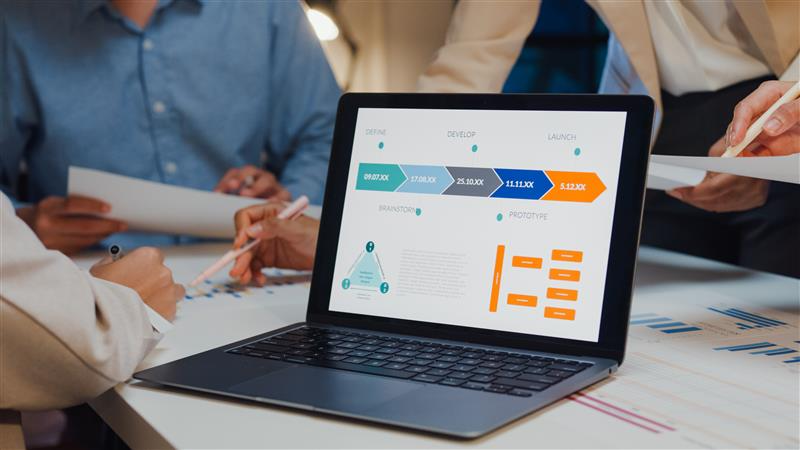
The discipline of project management is undergoing an unprecedented structural shift driven by technology. For decades, project managers relied primarily on static spreadsheets, manual Gantt charts, disconnected email threads, and physical whiteboards to steer corporate initiatives. While these traditional methodologies provided a basic record of progress, they inherently lacked agility. They required enormous administrative effort to maintain and frequently resulted in data silos, communication delays, and delayed reactions to scope deviations.
In a globalized corporate environment characterized by distributed hybrid teams and condensed delivery timelines, manual tracking mechanisms are no longer sufficient. Modern project management requires dynamic ecosystems where information updates in real time, workflows execute automatically, and predictive analytics offer foresight into operational bottlenecks. By leveraging advanced cloud infrastructure, intelligent automation, data integration hubs, and artificial intelligence, organizations are transforming project management from a lagging administrative function into an active, strategic growth driver.
The Convergence of Artificial Intelligence and Predictive Analytics
The integration of artificial intelligence is the most significant technological leap in modern project portfolio management. Traditional management systems operate on historical, retrospective data, tracking what has already occurred, such as missed milestones, budget overruns, or resource bottlenecks. AI transforms this paradigm by introducing predictive capabilities to the project lifecycle.
Predictive analytics engines process vast streams of anonymized historical data from thousands of past corporate initiatives. By analyzing variables such as team velocity trends, historical scope adjustments, past supplier delays, and individual resource allocations, the algorithm can accurately forecast future performance.
For instance, if a software engineering team’s output velocity drops slightly while a project’s technical scope expands, an intelligent system can predict a future milestone delay weeks before it manifests on a formal roadmap. This foresight allows leadership to proactively reallocate assets, scale back scope, or adjust client expectations before the delivery schedule is compromised.
Advanced Resource Allocation and Capacity Planning
Managing human capital across a complex corporate enterprise is a highly volatile operational challenge. Under-allocating tasks leads to underutilized labor and diminished profit margins, while over-allocating work to top-tier talent causes employee burnout, high attrition rates, and compromised output quality.
Smarter project management technology resolves this balancing act through intelligent resource optimization engines. Modern resource planning systems provide centralized visibility into the skills, availability, and active workloads of every individual across an entire enterprise.
-
Skillset Mapping Matrix: Algorithms analyze the specific competencies, past project experiences, and performance histories of individual employees to automatically recommend the optimal team configuration for a new initiative.
-
Dynamic Workload Rebalancing: When an unexpected delay or employee absence occurs on one initiative, the software automatically analyzes cross-departmental schedules to identify available personnel with identical skill sets, minimizing project downtime.
-
Predictive Capacity Modeling: Before executive leadership approves a new pipeline of projects, the platform simulates various execution scenarios to determine whether the existing workforce can handle the upcoming operational volume without requiring expensive freelance talent or immediate external hiring.
By offloading capacity scheduling to intelligent software platforms, project management offices eliminate the guesswork and personal biases that frequently complicate corporate resource distribution.
Hyper-Automation of Operational Workflows
A substantial portion of a project manager’s standard working week is consumed by repetitive, administrative data management. This includes compiling manual status updates, updating task boards, routing creative assets for executive approval, and sending persistent follow-up messages to team members regarding past-due deliverables.
Modern project management technology uses hyper-automation via robotic process automation and low-code workflow builders to eliminate this administrative friction. By establishing clear conditional logic chains, organizations can construct autonomous workflows that function seamlessly across disparate software networks.
For example, when a software developer completes a code repository push, the management system can automatically transition the corresponding task from development to quality assurance, assign a verification engineer, notify the product manager via a centralized communication channel, and update the master project status dashboard instantly. Automating these secondary data handoffs minimizes the risk of human data-entry errors, reduces the operational lag between project phases, and frees up human managers to focus on high-value strategic problem-solving and stakeholder management.
Real-Time Collaboration and Data Integration Hubs
The rapid rise of remote and hybrid workforce structures has highlighted the vulnerabilities of fragmented communication networks. When teams rely on isolated chat applications, localized file storage, and private emails to manage deliverables, critical institutional knowledge is inevitably lost, leading to misaligned objectives and expensive rework.
Smarter project ecosystems solve this fragmentation by functioning as single sources of truth. Modern collaborative platforms integrate task tracking, synchronous communication, document management, and digital whiteboarding into a unified cloud interface. Furthermore, these platforms utilize robust application programming interfaces to establish deep data synchronization with adjacent enterprise tools, such as Customer Relationship Management systems, enterprise resource planning platforms, and financial accounting ledgers.
This deep integration ensures that if a sales executive modifies a client deliverable within a CRM, the change instantly propagates through the project management platform, alerting the design and production teams to the updated parameters without requiring manual intervention.
Intelligent Risk Management and Mitigating Scope Creep
Scope creep—the uncontrolled, unauthorized expansion of project parameters without corresponding adjustments to budgets or timelines—is a leading cause of corporate project failure. Detecting scope creep manually is exceptionally difficult in the early stages because it typically occurs through minor, incremental changes across various micro-tasks.
Modern project tracking platforms combat this vulnerability by establishing automated governance guardrails. These systems continuously monitor task expansions, resource burn rates, and architectural adjustments against the initial project baseline charter. If a project’s budget consumption accelerates beyond a predefined threshold relative to actual feature completion milestones, the platform triggers an automated risk alert for the project steering committee.
Additionally, machine learning models can read project communication metadata to flag shifting sentiment indicators or escalating technical discussions, uncovering hidden project risks and friction points before they result in a formal project delay or strained client relationship.
Frequently Asked Questions
What is the distinction between project management software and project portfolio management tools?
Project management software focuses entirely on the execution of a single project, tracking individual tasks, short-term deadlines, team assignments, and immediate milestone progressions for a specific team. Project portfolio management tools operate at a macro-executive level, evaluating an entire collective network of active corporate initiatives simultaneously to analyze overarching capital expenditures, long-term resource capacity, strategic corporate alignment, and cross-project dependencies across an entire enterprise.
How do modern project management systems handle data security when hosting sensitive corporate information in the cloud?
Advanced project platforms secure proprietary corporate data by implementing rigorous enterprise-grade security protocols. These frameworks include end-to-end data encryption for information both at rest and in transit, multi-factor authentication requirements, and role-based access control parameters that restrict individual file visibility to authorized personnel. Furthermore, top-tier platforms maintain strict compliance with global data privacy and security benchmarks, such as SOC 2 Type II, ISO 27001, and regional data sovereignty mandates.
In what ways can project management tools assist in managing non-technical or creative teams?
While early iteration platforms were engineered specifically for technical software development, modern tools feature customizable structures optimized for creative and operational teams. For creative workflows, these tools integrate visual proofing and annotation features directly into task cards, automate asset version control, and utilize visual Kanban boards to streamline the multi-stage approval processes required for digital media, design campaigns, and editorial production pipelines.
How does the integration of time-tracking technology within project software impact overall profitability analysis?
Natively integrated time-tracking technology bridges the gap between daily human effort and corporate financial accounting. By requiring team members to log hours directly against specific project tasks, the software automatically calculates real-time labor expenses based on individual internal billing rates. This granular visibility allows companies to compare actual financial burn rates directly against the initial client budget estimation, revealing the precise profit margin of every active contract and identifying operational inefficiencies that erode corporate revenue.
What role does natural language processing play in modern project communication interfaces?
Natural language processing transforms communication by converting unstructured conversation data into actionable project structure. Advanced collaboration systems utilize this technology to read team chat logs and meeting transcripts, automatically identifying task commitments and generating new action items, assigning due dates, and updating project files without requiring manual data entry. Additionally, it analyzes written team updates to evaluate overall team sentiment, flagging underlying frustration or misalignment trends.
How should a business manage the employee resistance that frequently accompanies the deployment of a new project tool?
Overcoming software adoption resistance requires a structured change management framework that focuses on employee enablement rather than executive mandate. Organizations should involve cross-departmental team leads during the software evaluation phase to ensure the chosen system resolves actual daily operational pain points. Furthermore, companies must provide comprehensive role-specific training sessions, establish clear internal documentation guidelines, and explicitly demonstrate how the new technology eliminates tedious administrative tasks to build organic user buy-in.